Handwritten Nostalgia: A Warm, Whimsical Script Font for Makers
It started with a candle label. I’d just poured my first small-batch lavender-vanilla soy candle, and the glass jar sat on my worktable—clean, soft, waiting. I opened my design software, scrolled past bold sans serifs and elegant serifs, paused at Handwritten Nostalgia, and clicked. Instantly, “Lavender Daydream” flowed across the mockup—not stiff, not overly ornate, but tender and true, like something you’d find tucked inside a well-loved journal. That’s when I knew: this wasn’t just another script font. It was a quiet collaborator in my making process.
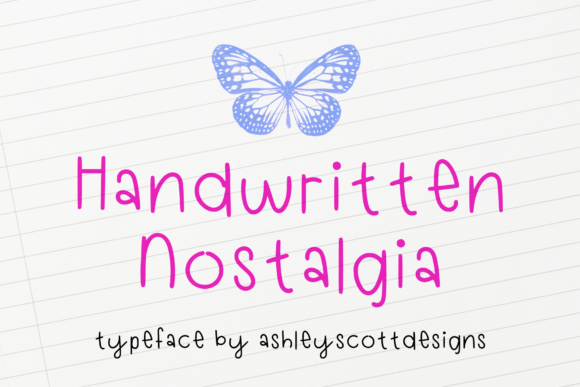
Handwritten Nostalgia lives in that sweet spot between authenticity and polish. It’s a script font from Script Amp with gentle irregularities—the slight lift on an ascender, the subtle taper of a downstroke, the organic spacing that mimics real pen-on-paper rhythm. No robotic uniformity here. Instead, it carries warmth, intimacy, and a whisper of childhood daydreams: notes passed in class, margin doodles, birthday cards signed with extra loops, love letters written slowly on Sunday afternoons. Visually, it’s light enough for delicate packaging yet expressive enough to hold center stage on a wedding welcome board or printable wall art.
I’ve used Handwritten Nostalgia across so many handmade touchpoints—and each time, it deepens the emotional texture of the piece. On cotton tote bags, it softens bold slogans into something personal and inviting. On kraft paper gift tags, it makes “For You” feel handwritten just for that person. For digital printables—like planner pages or habit trackers—it adds charm without sacrificing clarity. And on ceramic mugs? Paired with a clean sans serif for the subtitle (“Brewed with Love”), it creates instant visual harmony and brand consistency.
What makes it especially useful for makers is its thoughtful design for real-world production. The letterforms have generous x-height and open counters—so even at 10pt on a 1.5-inch sticker, “Thank You” remains legible on a Cricut cut or Silhouette vinyl sheet. I tested it on matte sticker paper, glossy labels, and uncoated cardstock—and every time, ink held the curves beautifully. No thin hairlines that vanish in printing, no cramped joins that clog during cutting. It’s built for crafters who need reliability *and* soul.
Here’s where it shines most:
- Candle & soap labels — Especially for botanical, apothecary, or self-care brands where warmth matters more than formality.
- Greeting cards & invitations — Perfect for names, dates, and short poetic lines (think “You’re Invited to Begin” or “Happy Little Birthday”). Avoid long paragraphs—it’s a display font, not a body text workhorse.
- Printable wall art & digital downloads — Its personality elevates simple quotes (“Grow Wild”, “Home is Where the Heart Is”) into shareable, shop-worthy designs.
- Boutique packaging & tags — Tucks seamlessly into gift boxes, wraps, and hang tags for handmade jewelry, bath bombs, or stationery sets.
- Seasonal products — I used it for hand-lettered Halloween treat bags (“Trick or Treat, Sweetly”) and spring garden party invites—always feeling fresh, never dated.
Font pairing is where Handwritten Nostalgia truly sings. I almost always pair it with a friendly, low-contrast sans serif—think Montserrat Light or Poppins Regular—for subtitles, ingredients lists, or fine print. That contrast lets the script breathe while keeping everything grounded and readable. For wedding stationery, I’ve layered it over a delicate serif like Playfair Display for elegance without fuss. And yes—I’ve paired it with other script fonts too, but only when one serves as the emotional anchor (Handwritten Nostalgia) and the other as subtle accent (a tighter, bolder script for monograms or borders).
Before using Handwritten Nostalgia commercially—whether on physical goods, SVG files for cutting machines, or editable Canva templates—I always check what’s included. The full font package has multiple weights (Light, Regular, Bold), true-drawn alternates, contextual ligatures, and swashes for special moments—like turning “love” into something lyrical with a graceful exit stroke. It supports extended Latin characters, so names with accents (José, naïve, café) render cleanly. And crucially, it comes with a commercial license—meaning you can use it on products you sell, whether that’s printed greeting cards, downloadable planners, or embroidered tote bags.
One thing I’ve learned: Handwritten Nostalgia doesn’t shout. It leans in. That makes it ideal for brands rooted in care, slowness, intention—handmade businesses where customers aren’t just buying a candle or a card, but a feeling. When someone holds a product with this font on the label, they don’t just see type—they sense time taken, attention given, heart involved.
So if you’re choosing fonts for your next batch of holiday gift tags, designing a new set of printable recipe cards, or prepping your first Etsy listing for wedding signage—you’ll want Handwritten Nostalgia in your toolkit. Not because it’s trendy, but because it feels human. Because it fits like a favorite sweater. Because sometimes, the most powerful design choice isn’t the boldest one—it’s the one that makes people pause, smile, and remember how good it feels to be seen.